



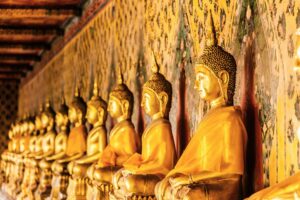


In the past many of Thai dishes were reserved for only royal family because of their complexity in recipes, and taste. Some menus may require more than just one professional chef to cook, and during that time many ingredients are too expensive for normal citizen to buy. In order to serve food to royalty the dish decoration needs to be at its finest, some of you may have seen carved vegetables served with a full meal, that’s the way they used to serve vegetables back in the days. That’s why Thai Royal Cuisine were considered luxury and nobody outside the palace can taste them.
Nowadays, Royal Thai Cuisine become easier for us to try, some menus are sold in a small regular restaurant (The recipes may be different to the original Royal Thai Cuisine but there are the same menu). These recipes’ knowledge passed down to our generation due to descendants of palace cooks have learned the recipes and passed down within family or restaurants.
Royal Thai Cuisine History
Dated back to the Ayutthaya kingdom period around 1350s, chefs were trained to please both palate and reflect the sophistication of the cuisine, and some dishes names contain deep and beautiful meaning.

- During Ayutthaya period, Thailand started trading with foreigner and influenced by them. Thai blended their recipes with foreign knowledge like Persian spices, Portuguese desserts, and Indian curries, adapted them to create new dishes for Royal.
- As in Thonburi & Early Rattanakosin Periods, dishes were expected to have the perfect balance in favors and food carving has become an essential courtly skill, taught to palace attendants.
- The era of “The Chakri dynasty”, during this period Thai cuisine has been elevated its sophistication to the highest due to King Rama II loves to art and poet. He even wrote the recipes in verses describing the aroma, texture, and love of food. French and British cooking techniques were introduced during this era, and dishes were presented on tiered trays.
- The modern era, during King Rama V’s modernization of Thailand royal recipes began to be shared with noble families and eventually with the public.
Royal Thai Cuisine Characters
It’s different from reginal Thai food which mainly emphasized on bold flavors, Royal Thai Cuisine focuses on these four dimensions
- Refinement of flavor: Royal Thai Cuisine delivers a perfect balance in flavor in every bite you take without any flavor being too strong or light.
- Presentation: Thai Royal dishes always presented in elegance ways, food must be carved, shaped, or arranged artistically. They are often in the shape of flowers or mythical symbols.
- Quality of Ingredients: They only use fresh, finest and rare ingredients to cook royal dishes, which is why it’s impossible to cook outside the palace.
- Dining Etiquette: Meals are often served in small and delicate potions to allow people to try multiple dishes.
Recommended Royal Thai Dishes
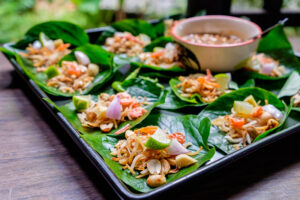
1. Miang Kham :
bite-size appetizer with toasted coconut, diced lime, shallots, ginger, dried shrimp, chili, and syrup filled within betel leaves. It balances all the flavors in one small bite with aromatic and refreshing.
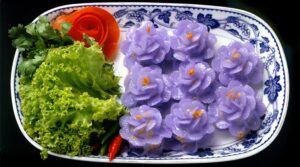
2. Chor Muang :
also known internationally as Steamed flower dumplings. It’s one of the most iconic snacks for royal cuisine, made with purple-hued rice flour filled with minced pork, chicken, or shrimp, then shaped into a flower as a symbol of beauty. It gives light sweet and savory tastes to get you ready for the main dishes.
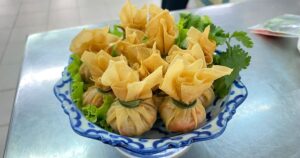
3. Thung Thong :
crispy deep-fried pouches tied with pandan leaves, filled with lightly seasoned minced pork mixed with shrimp, carrot, and chopped yam. Serve as an appetizer with sweet-sour sauce with a little chili. The name Thung Thong represents its shape like a small pouch that carries coins or gold, they named it this as a blessing for those who tasted this dish for their life to be full of gold.
4. Khao Chae :
Fragrant rice in iced jasmine water, the menu was originally from Mon people and refined in the royal cuisine. The dish combined chilled jasmine-scented rice with side condiments like stuffed shallots, shredded sweet pork, shrimp paste ball, and fresh vegetables. Khao Chae is served during summer as a cooling dish that offers flavorful and refreshing.
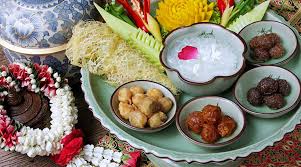
5. Nam Phrik Long Ruea :
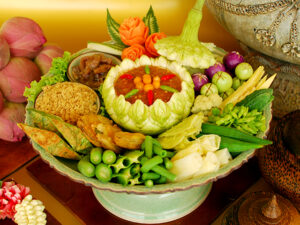
One of Thailand most famous royal dishes, it’s a chili paste served with boiled fresh vegetables. It is made of roasted chilies, garlic, shallots, shrimp paste, dried shrimp, palm sugar, and caramelized pork to balance the flavors. The name comes from the King Rama V dining boat’s chef, he made this dish to serve the king with leftovers ingredients, and it became their favorite since.
6. Massaman :
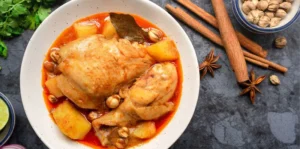
Thailand most beloved royal dish and well known worldwide, influenced by Persian and Indian merchants who brought aromatic spices to trade with Thailand. This curry dish is a fusion between Thai and Middle Eastern flavors, made with coconut milk, beef or chicken, roasted peanuts, and blended spices. It gives mild, sweet, tangy and a little spicy taste. It once served in royal Thai banquets and become all-time favorite.
7. Khanom Jeen Sao Nam :
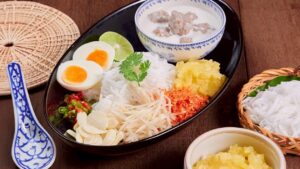
This one is considered a rare royal recipe features rice noodle served cold with coconut milk, pineapple, ginger, and dried shrimp. It’s served during summer like Khao Chae as a cooldown dish from the heat. It’s sweet and savory with aromatic and tropical like note.
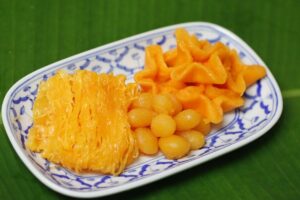
8. Thong Yip, Thong Yod, Foi Thong :
These are Thai sweets that’s introduced during Ayutthaya period by a Portuguese Thai noblewoman. They are delicate egg yolks and syrup sweets that come in different shapes based on their names. “Thong” means gold from their golden color, and Yod mean drop that’s why Thong Yod shapes in sphere like water drop. As for Thong Yip, Yip means pick up hence the sweet shape like it’s being picked up by something. Finally, Foi Thong, Foi means shredded so it comes in a small shredded sweet form.
9. Luk Chup :
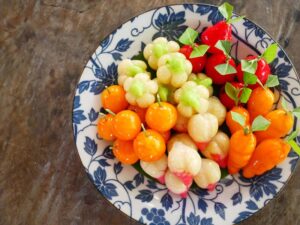
Mung bean fruit-shaped sweet, this one is a colorful and glossy sweet molded into tiny fruits and vegetables. It’s introduced from Portugal then adapted and perfected in the royal kitchen during Ayutthaya period. This is one of the most difficult sweets to make because you must mold each one to be precisely shape like fruits and vegetables by hand.
10. Khanom Thong Ek :
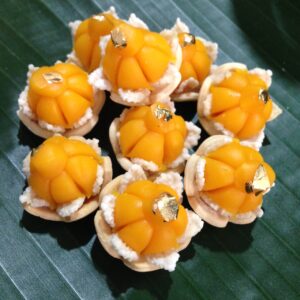
One of the most elegant dishes and sweets, its name holds the meaning of success and to be the best. Usually gives as a blessing meaning of high achievement to receivers. It’s made of mung bean flour, coconut milk, sugar, and egg yolks, the mixture is slow-cooked until smooth. Shaped into floral design and topped with gold leaf. It’s still hard to find nowadays since not many people know how to make it properly.
If you want to try authentic Thai Royal Cuisine there are many restaurants specialize in this cuisine, still most menu is easy to find now but they are not as authentic as the specialize restaurant since some of them are owned by the descendants of the previous royal cooks. Some of the menus that were royal kitchen are now sold in street food stalls, and you can find some royal sweets in the market too. And if you have a chance to try at least one of the royal dishes from anywhere their taste and complexity will live in your memory forever.