



Thailand’s Royal Palaces are not just breathtaking landmarks but also living chapters of Thailand history. They reflect Thailand monarchy, spiritual tradition, and the cultural exchanges between Thailand and neighboring Asia and the West. Visiting them gives travelers a glimpse into Thailand’s royal history, artistic excellence, and spiritual depth.
Here are some of the most significant Royal Palaces you should add to your itinerary:
1. The Grand Palace (Bangkok)
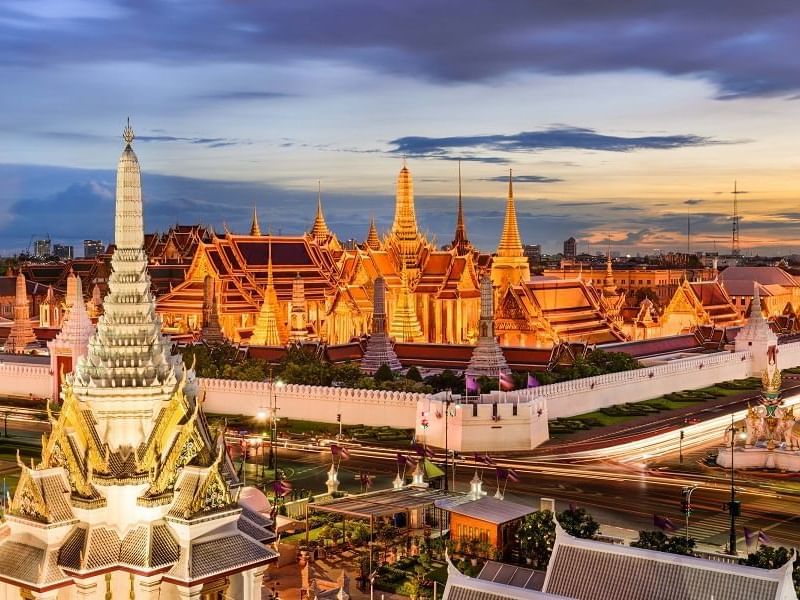
The Grand Palace, built in 1782 by King Rama I and was established when Bangkok became the new capital of Siam after the fall of Ayutthaya. For more than a century, it served as the residence of Thau kings and the heart of the Thai court and government. Now it’s no longer served as the official residence, but it remains as the ceremonial center of the monarchy.
Historical importance
- Seat of the Chakri dynasty
- Venue for royal coronations and state ceremonies.
- Houses the Temple of the Emerald Buddha (Wat Phra Kaew), the most sacred Buddhist temple in Thailand.
Architecture
- The Grand Palace’s architecture is a blend of traditional Thai roofs with Western-style halls (this was later introduced by the later king)
- There are murals depicting the Thai version of Ramayana epic
Tips for visitors
- The dress code is strictly enforced, so you should dress politely. We suggest wearing clothes that cover your knees and shoulders, and no shorts or tank top.
- If you are interested in visiting The Grand Palace, come early to avoid heat and crowds (the opening time is 8:30 AM)
- Since The Grand Palace covers a large area (around 218,000) square meters, it should take around 2-3 hours to explore the entire palace.
2. Dusit Palace
Built during King Rama V’s reign (late 19th century), Dusit Palace reflects the king’s fascination with European architecture after his travel to the west. King Rama V is remembered as a modernizer of Siam.
Historical importance
- The Palace showcases Siam’s modernization during the colonial period in Southeast Asia.
- Vimanmek Mansion (once the world’s largest golden teakwood building) is in this palace. And it housed many royal residences.
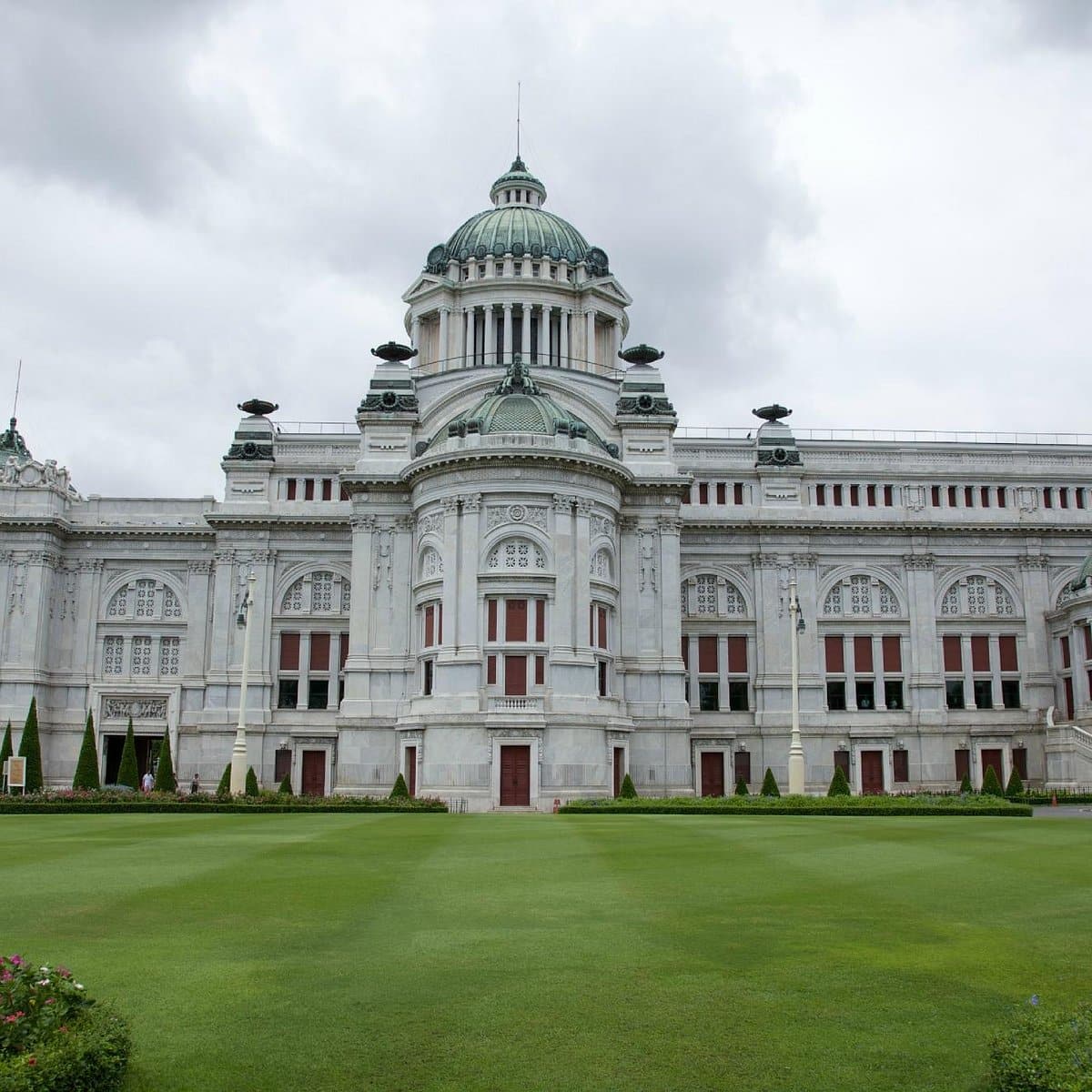
- The Ananta Samakhom Throne Hall which was used for royal receptions is a part of the palace.
Architecture
- A mix of European neoclassical design and Thai motifs.
- Throne Hall designed by Italian architects Mario Tamagno and Annibale Rigotti in Italian Renaissance style. Decorated with Italian marble and fresco art.
- Vimanmek Mansion (constructed in 1900) was entirely made of golden teak and symbolized wealth and craftsmanship.
3. Bang Pa-In Summer Palace (Ayutthaya)
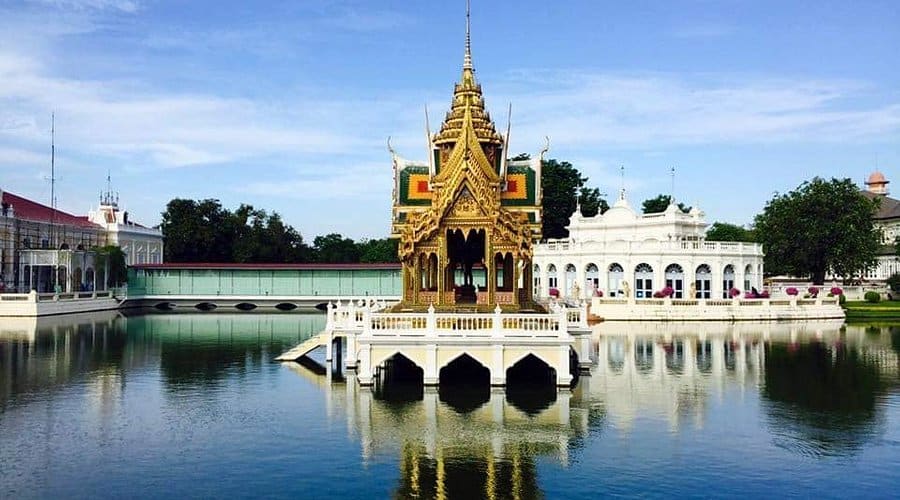
The Bang Pa-In Summer Palace was built back in 17th century, but it fell into disuse after the fall of Ayutthaya. Later in 19th century it was revived by King Rama IV and V as a royal retreat.
Historical importance
- The palace serves as a summer residence for Chakri dynasty kings.
- Symbol of royal leisure and cross-cultural design influences.
Architecture
- A mix of Thai, Chinese, and European styles.
- European-inspired mansions reflect 19th-century globalization.
Tips
- Located ~60 km north of Bangkok, easy day trip from the capital
- Golf carts available for rent to explore the large grounds.
4. Phra Nakhon Khiri (Khao Wang Palace, Phetchaburi)
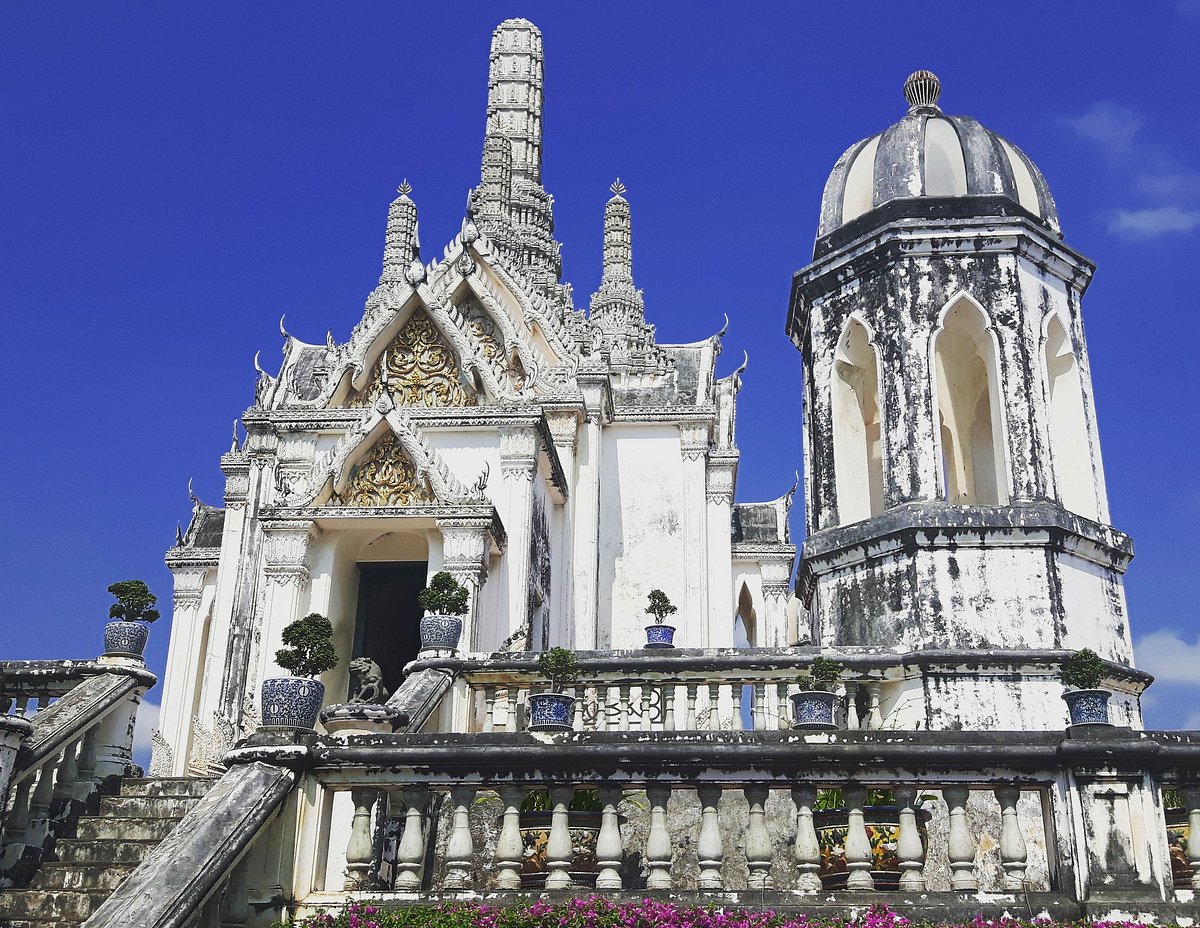
Located on a hilltop Phetchaburi, the palace was built in 1860 by King Rama IV. It served as a summer retreat and combines Thai, Chinese, and Western architecture.
Historical importance
- It reflects King Mongkut’s interest in astronomy (he often observed stars here).
- It was used as a retreat and cultural center for the monarchy.
Architecture
- Palace buildings influenced by neoclassical and Chinese designs.
- It is a complex of royal halls, temples, and observatories.
Tips
- The palace grounds are now a historic park and museum.
- Accessed via a cable car or steep climb.
4. Bhubing Palace (Chiang Mai)
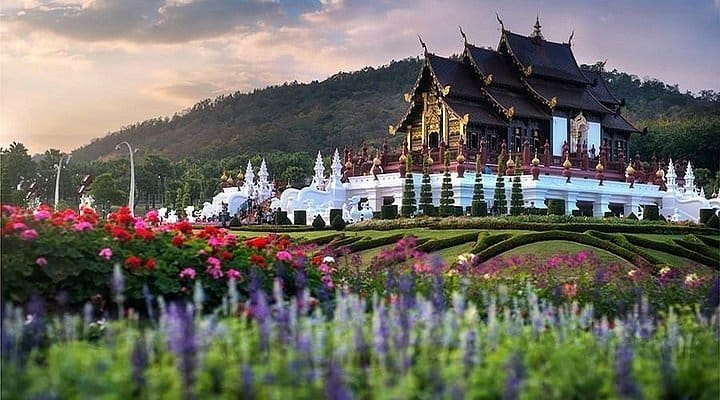
The palace was built in 1961 and serves as the royal family’s winter residence due to Chiang Mai’s weather. Nowadays, it’s still actively used when the royal family visits the north. The palace is also famous for its landscape gardens.
Historical importance
- Constructed to host visiting foreign dignitaries and for the royal family’s seasonal stays.
- Located near Doi Suthep, a spiritually significant mountain.
- Modern Thai style with functional simplicity.
- Surrounded by gardens include roses, temperate flowers, and a bamboo grove with rare species.
Visitor Tips
- Open when the royal family is not in residence.
- Best time: December–February, when flowers are in full bloom.
To conclude this blog Thailand’s Royal Palaces are not just about architecture wonders, they also represent each chapter of Thai history through their structures, murals, messages, and people. Exploring them allows travelers to connect with Thailand’s past while appreciating the artistry and cultural blending that define this beautiful country.